
附錄第 37 頁,共 40 頁約 1 分鐘
真實世界的架構
底下是關於真實世界的系統架構是如何設計的文章
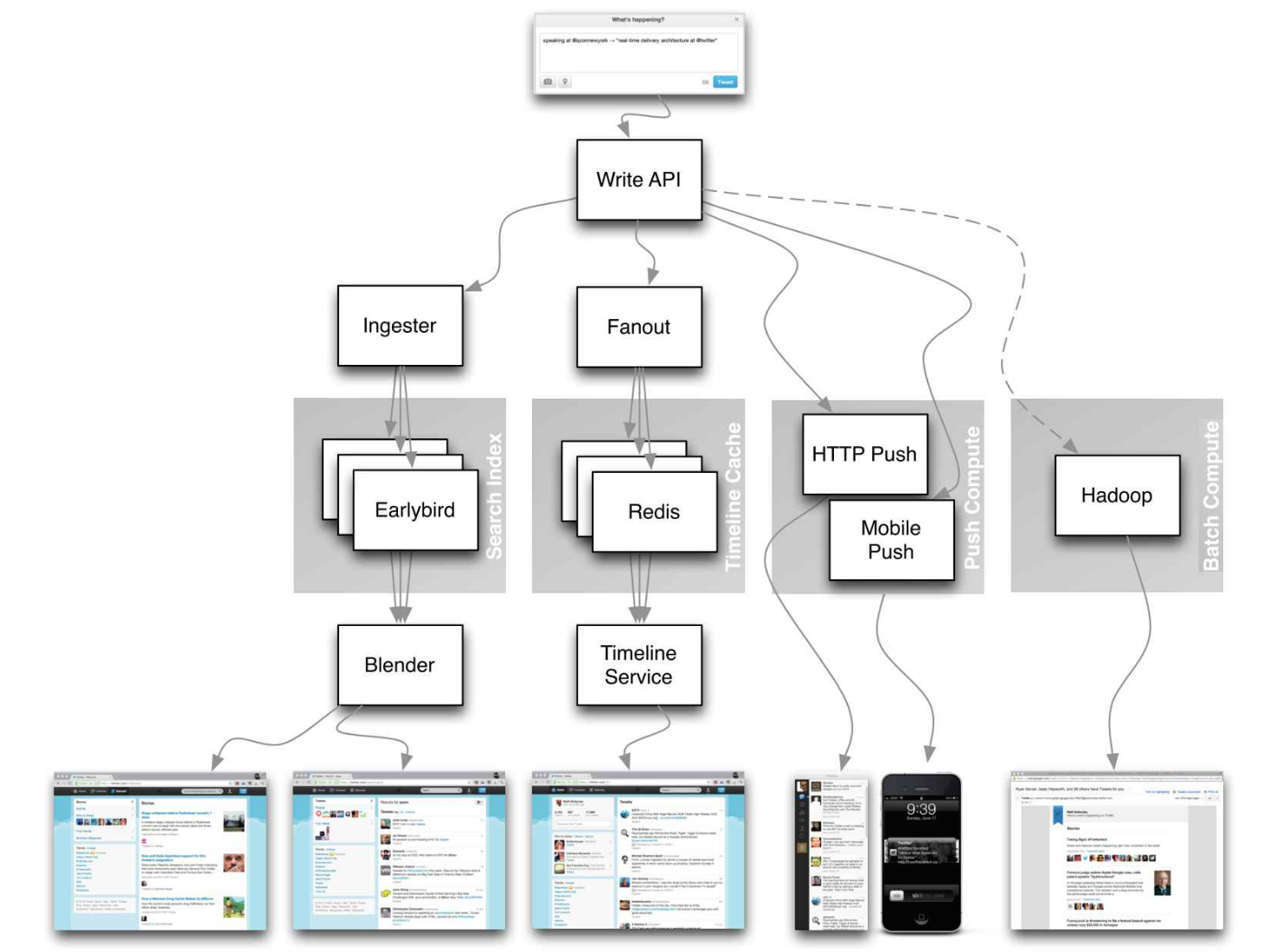
不要關注以下文章的細節,而是注意以下幾點:
- 找到這些文章中共通的原則、技術和模式
- 學習每個元件負責解決哪些問題、在什麼情況下使用、什麼情況下不適用
- 複習學習過的文章
| 種類 | 系統 | 參考來源 |
|---|---|---|
| 資料處理 | MapReduce - Google 的分散式資料處理 | research.google.com |
| 資料處理 | Spark - Databricks 的分散式資料處理 | slideshare.net |
| 資料處理 | Storm - Twitter 的分散式資料處理 | slideshare.net |
| 資料儲存 | Bigtable - Google 的列式資料庫 | harvard.edu |
| 資料儲存 | HBase - Bigtable 的開放原始碼解決方案 | slideshare.net |
| 資料儲存 | Cassandra - Facebook 的列式資料庫 | slideshare.net |
| 資料儲存 | DynamoDB - Amazon 的文件式資料庫 | harvard.edu |
| 資料儲存 | MongoDB - 文件式資料庫 | slideshare.net |
| 資料儲存 | Spanner - Google 的全球分散式資料庫 | research.google.com |
| 資料儲存 | Memcached - 分散式的記憶體快取系統 | slideshare.net |
| 資料儲存 | Redis - 具有持久化及值型別的分散式快取系統 | slideshare.net |
| 檔案系統 | Google File System (GFS) - 分散式的檔案系統 | research.google.com |
| 檔案系統 | Hadoop File System (HDFS) - GFS 的開放原始碼解決方案 | apache.org |
| 其他 | Chubby - Google 的分散式系統低耦合鎖服務 | research.google.com |
| 其他 | Dapper - 分散式系統監控基礎設施 | research.google.com |
| 其他 | Kafka - LinkedIn 的 pub/sub 訊息佇列服務 | slideshare.net |
| 其他 | Zookeeper - 集中式的基礎架構和協調服務 | slideshare.net |
| 貢獻更多架構 | Contribute |